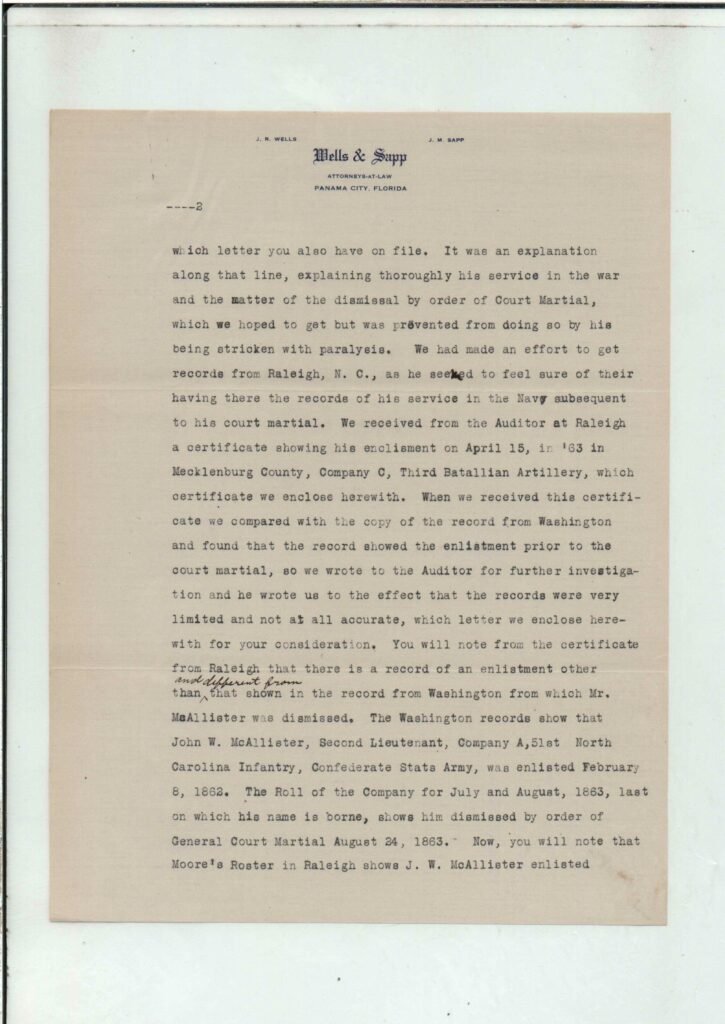
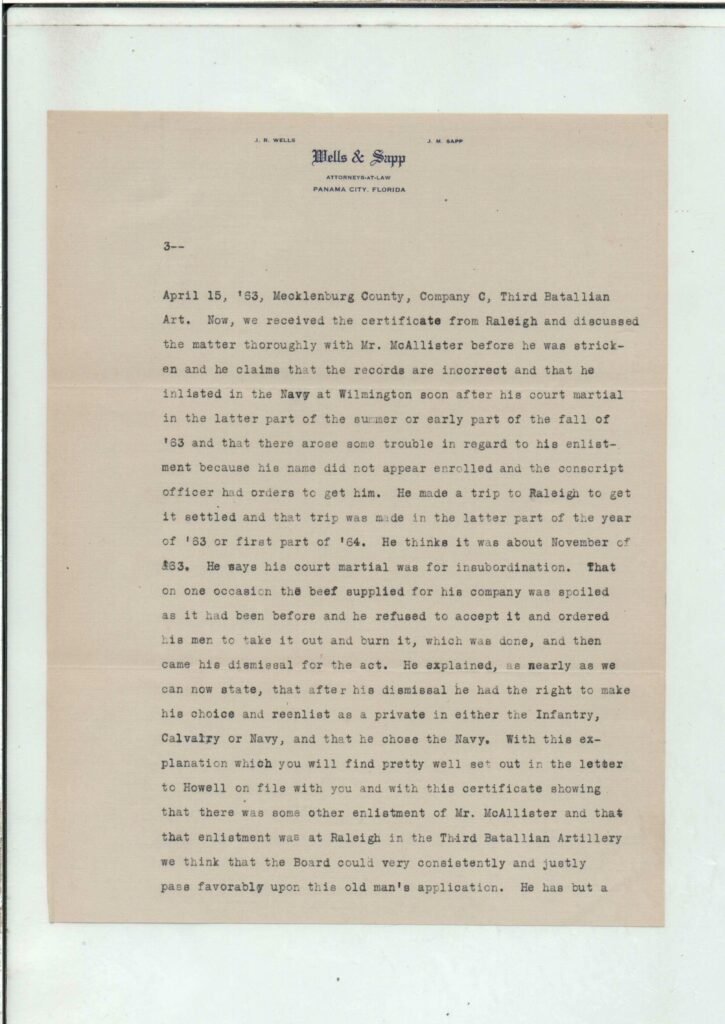
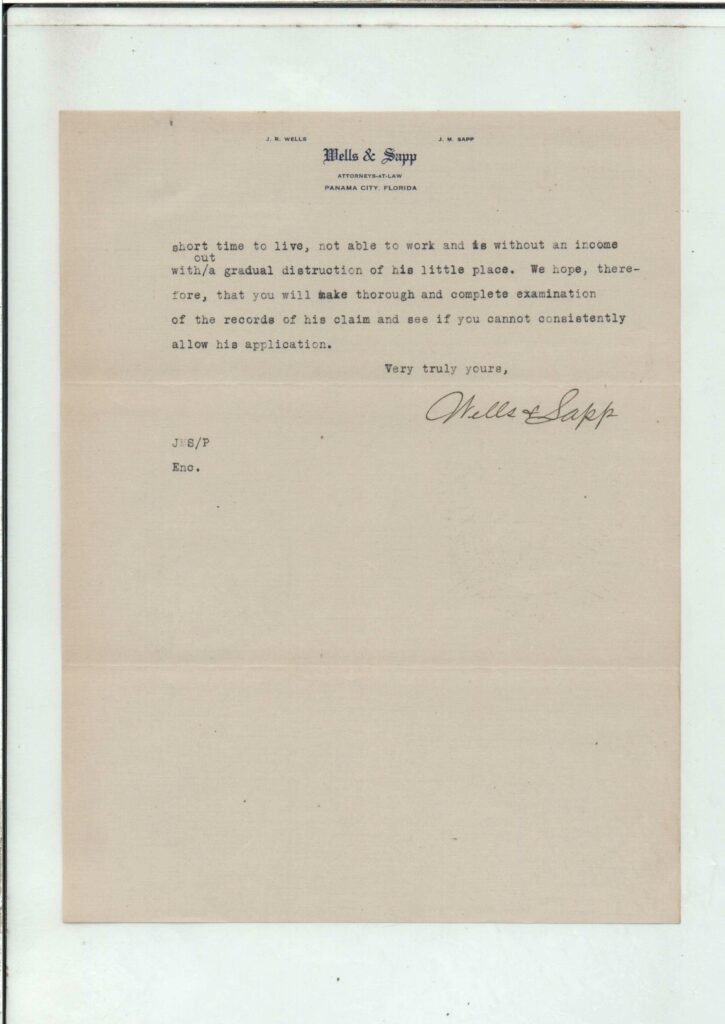
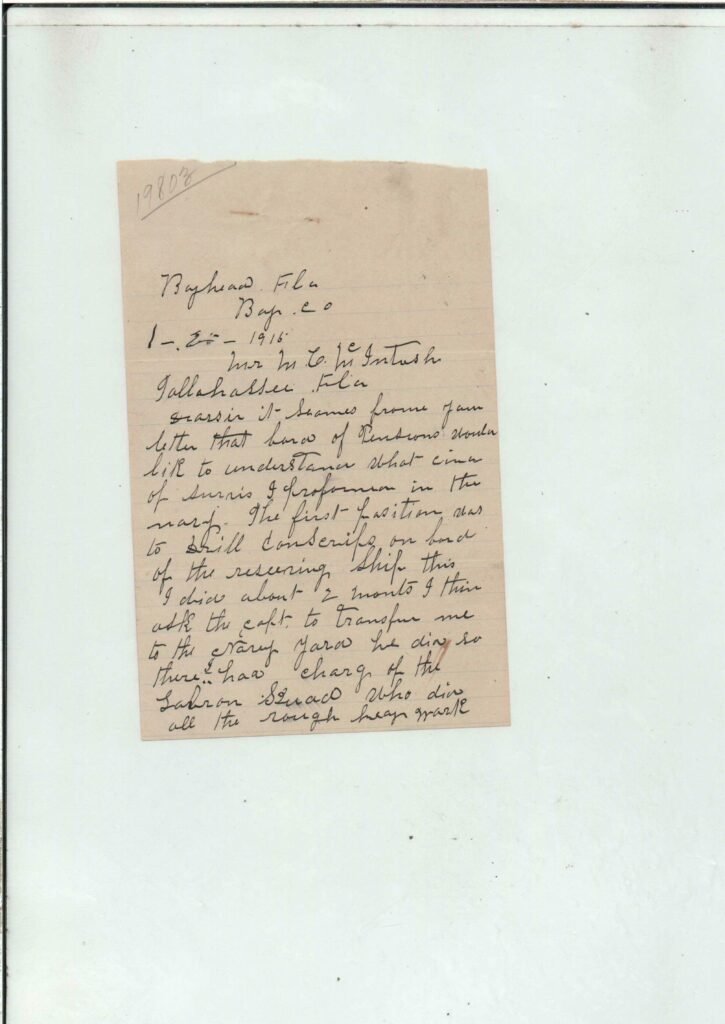
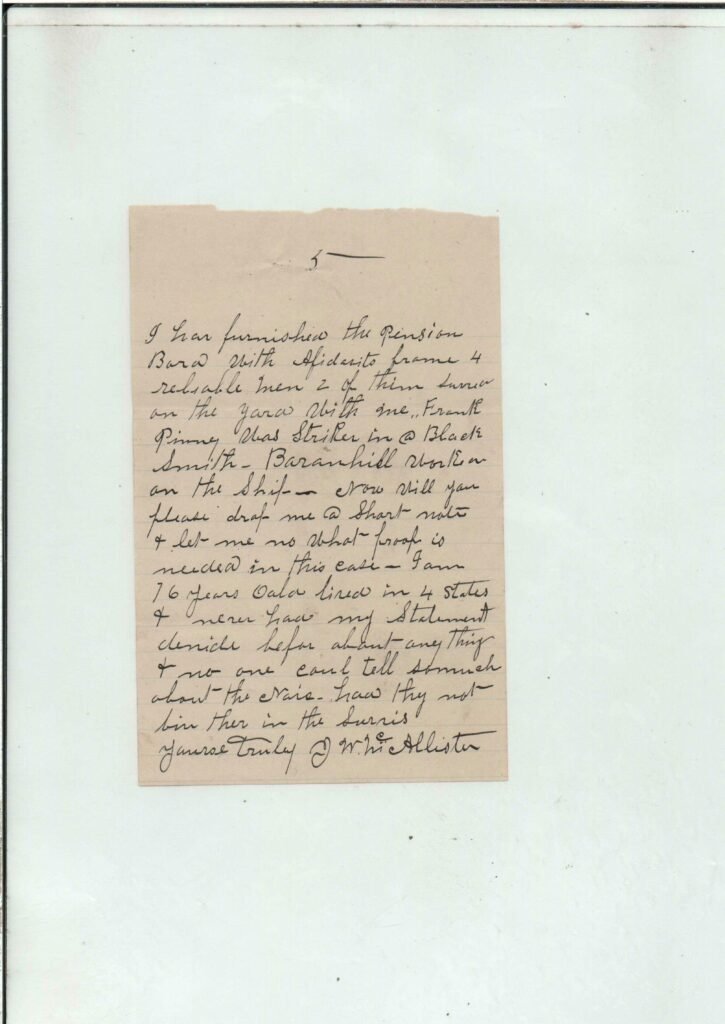
This “memoir” is compiled from John W. McAllister’s pension file, primarily from three letters: John W. McAllister, letter to L. H. Howell (state representative), 9 May 1913; Wells and Sapp, attorneys for John McAllister, letter to State Board of Pensions, 22 Jul 1914; and John W. McAllister, letter to M. C. McIntosh (Board of Pensions), 20 Jan 1915. Images are at the end of this page.
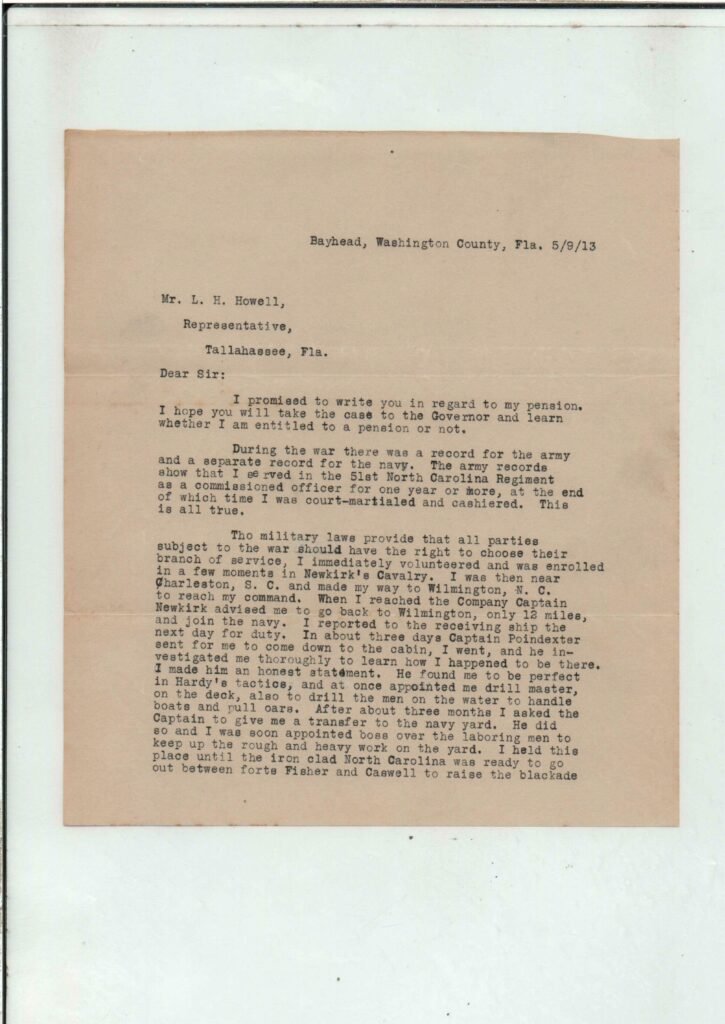
During the war there was a record for the army and a separate record for the navy. The army records show I served in the 51st North Carolina Regiment as a commissioned officer for one year or more, at the end of which time I was court-martialed and cashiered. This is all true.
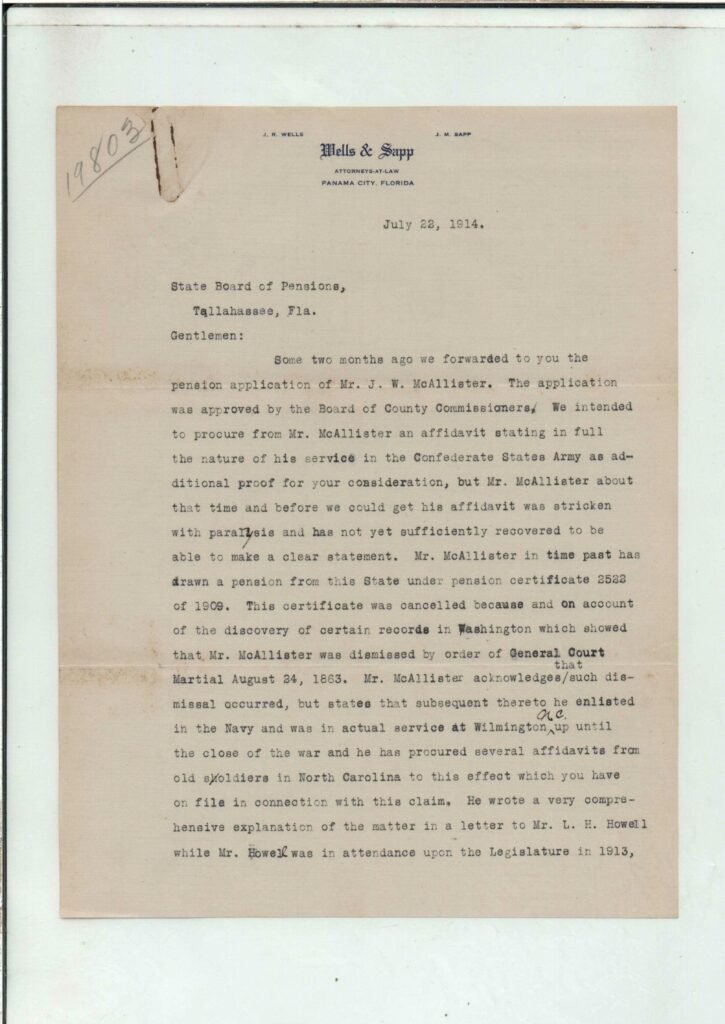
“[McAllister] says his court martial was for insubordination. That on one occasion, the beef supplied for his company was spoiled as it had been before, and he refused to accept it and ordered his men to take it out and burn it, which was done, and then came his dismissal for the act.” -Wells and Sapp
The military laws provide that all parties subject to the war should have the right to choose their branch of service. I immediately volunteered and was enrolled in a few moments in Newkirk’s Cavalry [Co. A, 3rd NC Cavalry]. I was then near Charleston, S. C. and made my way to Wilmington, N. C. to reach my command. When I reached the Company, Captain Newkirk advised me to go back to Wilmington, only 12 miles, and join the navy. [Newkirk’s company was in Virginia at the time McAllister claimed to enlist.] I reported to the receiving ship [CSS Arctic] the next day for duty. In about three days Captain Poindexter sent for me to come down to the cabin. I went, and he investigated me thoroughly to learn how I happened to be there. I made him an honest statement. He found me to be perfect in Hardy’s [Hardee’s] tactics and at once appointed me drill master, on the deck, also to drill the men on the water to handle boats and pull oars.
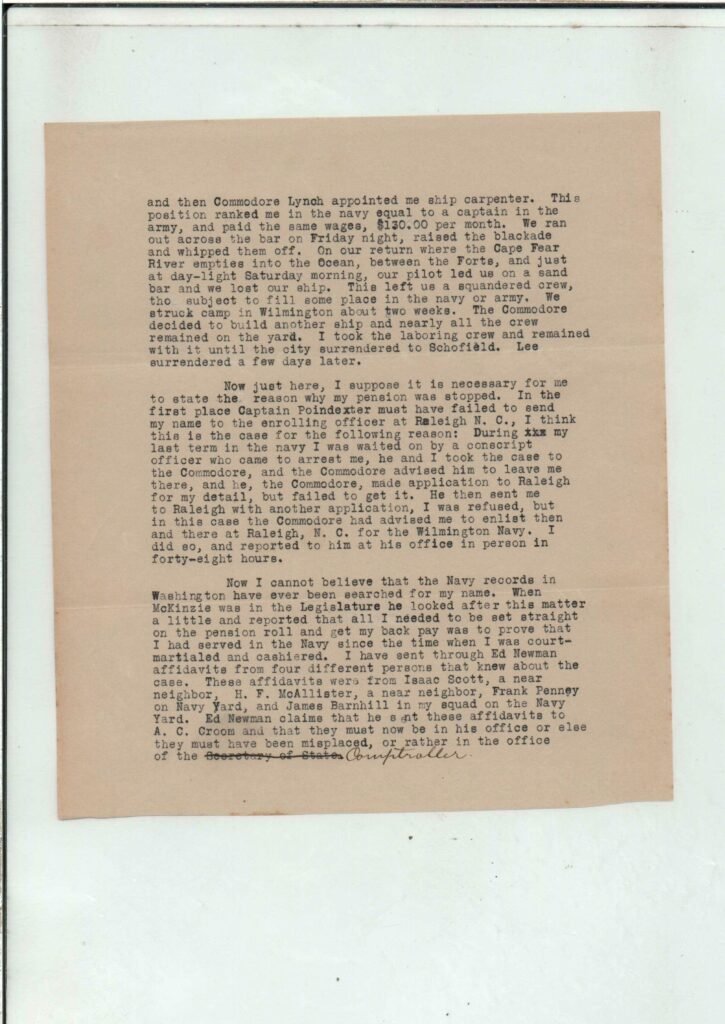
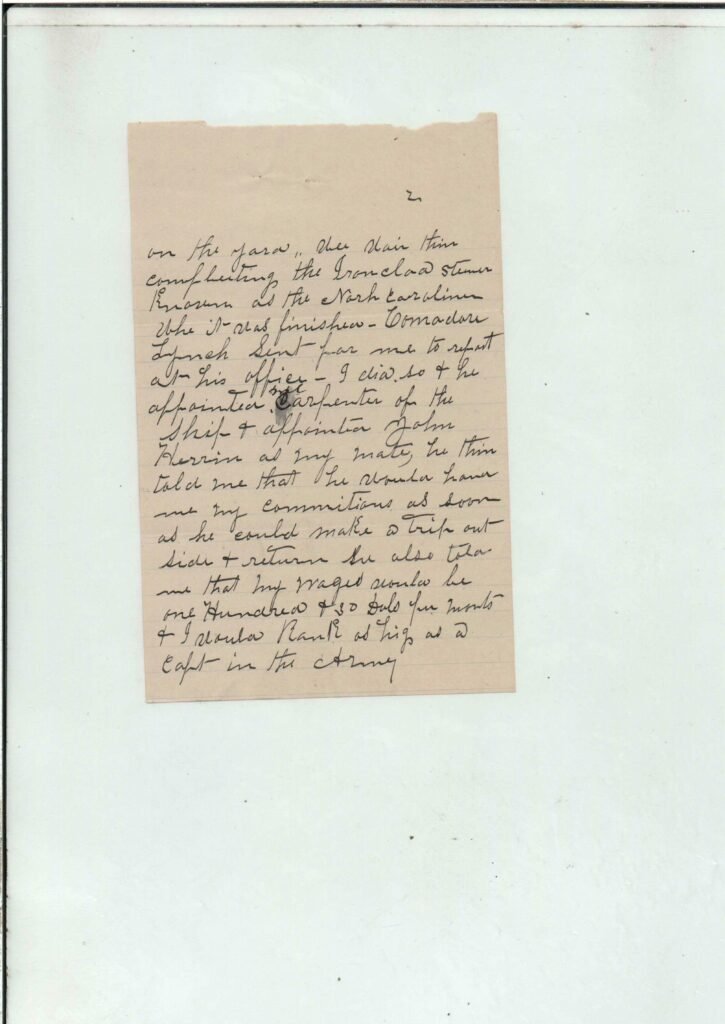
After about two or three months I asked the Captain to give me a transfer to the navy yard. He did so, and I was soon appointed boss over the laboring men to keep up the rough and heavy work on the yard. I held this place until the ironclad North Carolina [actually was working on the CSS Raleigh, the North Carolina having been completed the previous year] was ready to go out between Forts Fisher and Caswell to raise the blockade and then Commodore Lynch appointed me ship carpenter and appointed John Herring as my mate. [According to records, McAllister served as a landsman on the Raleigh, but John Herring was the carpenter’s mate; no carpenter was in the Raleigh’s crew list.] This position ranked me in the navy equal to a captain in the army, and paid the same wages, $130.00 per month. He told me he would have me my commission as soon as he could make a trip outside and return.
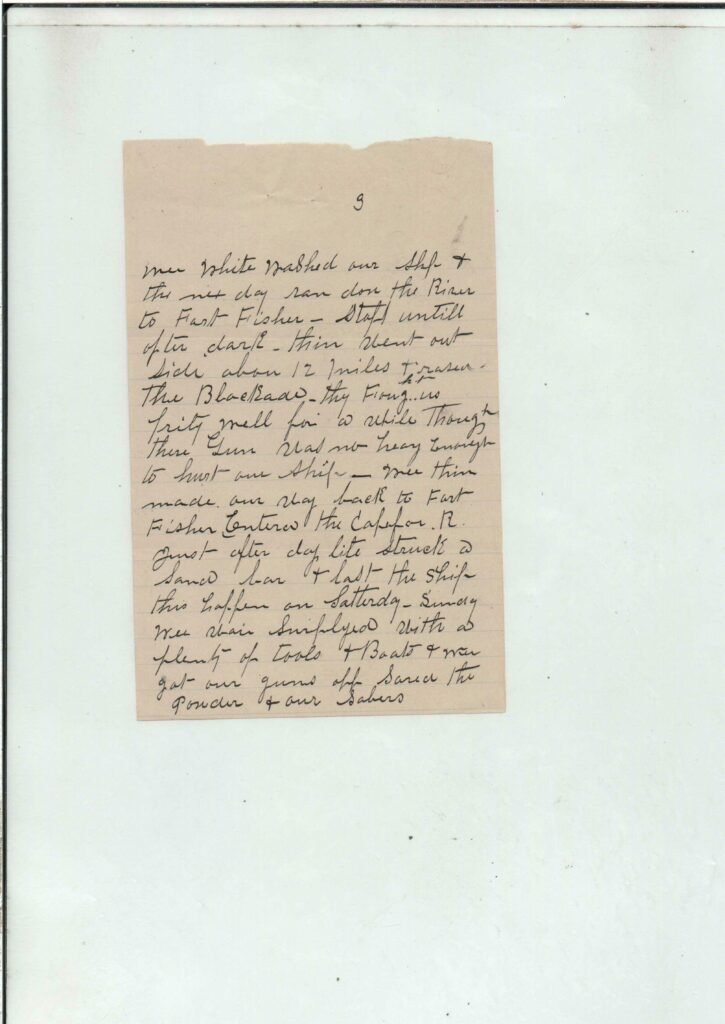
We white washed our ship and the next day [Friday] ran down the river to Fort Fisher and stayed until after dark. We ran out across the bar about 12 miles on Friday night, raised the blockade and whipped them off. They fought us pretty well for awhile though their guns were not heavy enough to hurt our ship.
On our return, where the Cape Fear River empties into the Ocean, between the Forts, and just at daylight Saturday morning, our pilot led us on a sand bar, and we lost our ship. Sunday, we were supplied with aplenty of tools and boats and we got our guns off, saved the powder and our sabers.
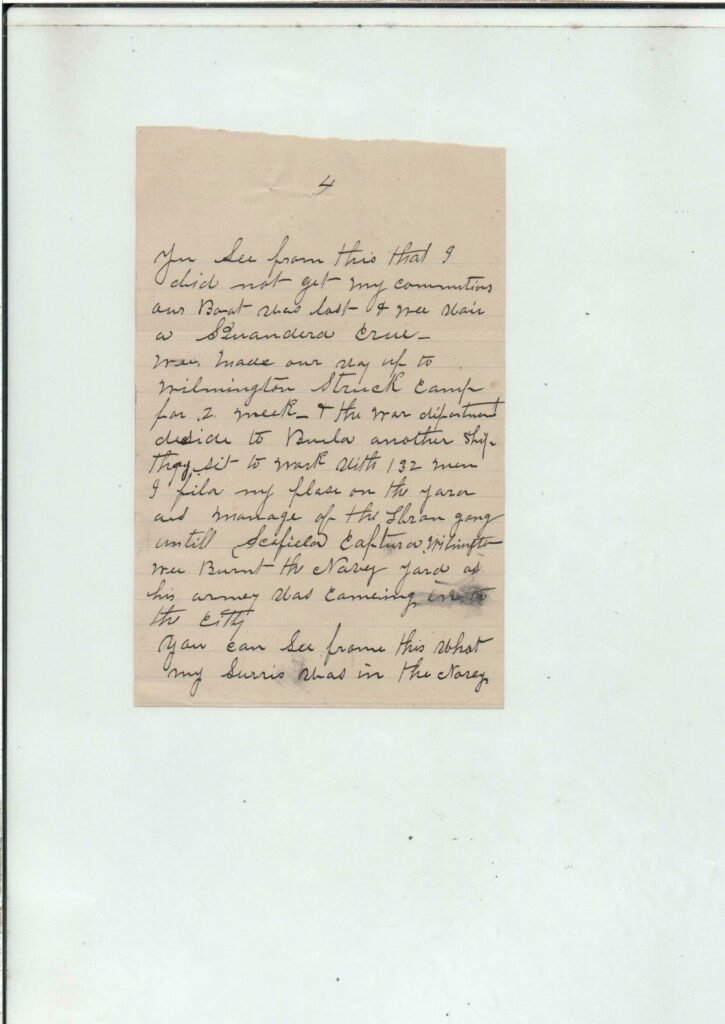
I did not get my commission as our boat was lost. This left us a squandered crew, though subject to fill some place in the navy or army. We struck camp in Wilmington about two weeks. The War Department decided to build another ship and nearly all the crew (132 men) remained on the yard. I took the laboring crew and remained with it until the city surrendered to Schofield. We burnt the navy yard as he was entering the city. Lee surrendered a few days later.
Captain Poindexter must have failed to send my name to the enrolling officer in Raleigh. During my last term in the navy, I was waited on by a conscript officer who came to arrest me. He and I took the case to the Commodore, and the Commodore advised him to leave me there, and he, the Commodore, made application to Raleigh for my detail but failed to get it. He then sent me to Raleigh with another application. I was refused, but in this case the Commodore had advised me to enlist then and there at Raleigh for the Wilmington Navy. I did so and reported to him at his office in person in forty-eight hours.
Copyright © 2021 – 2026 by Kirk Ward. All rights reserved.